
Dan Smith, Solutions Architect, Mission Solutions
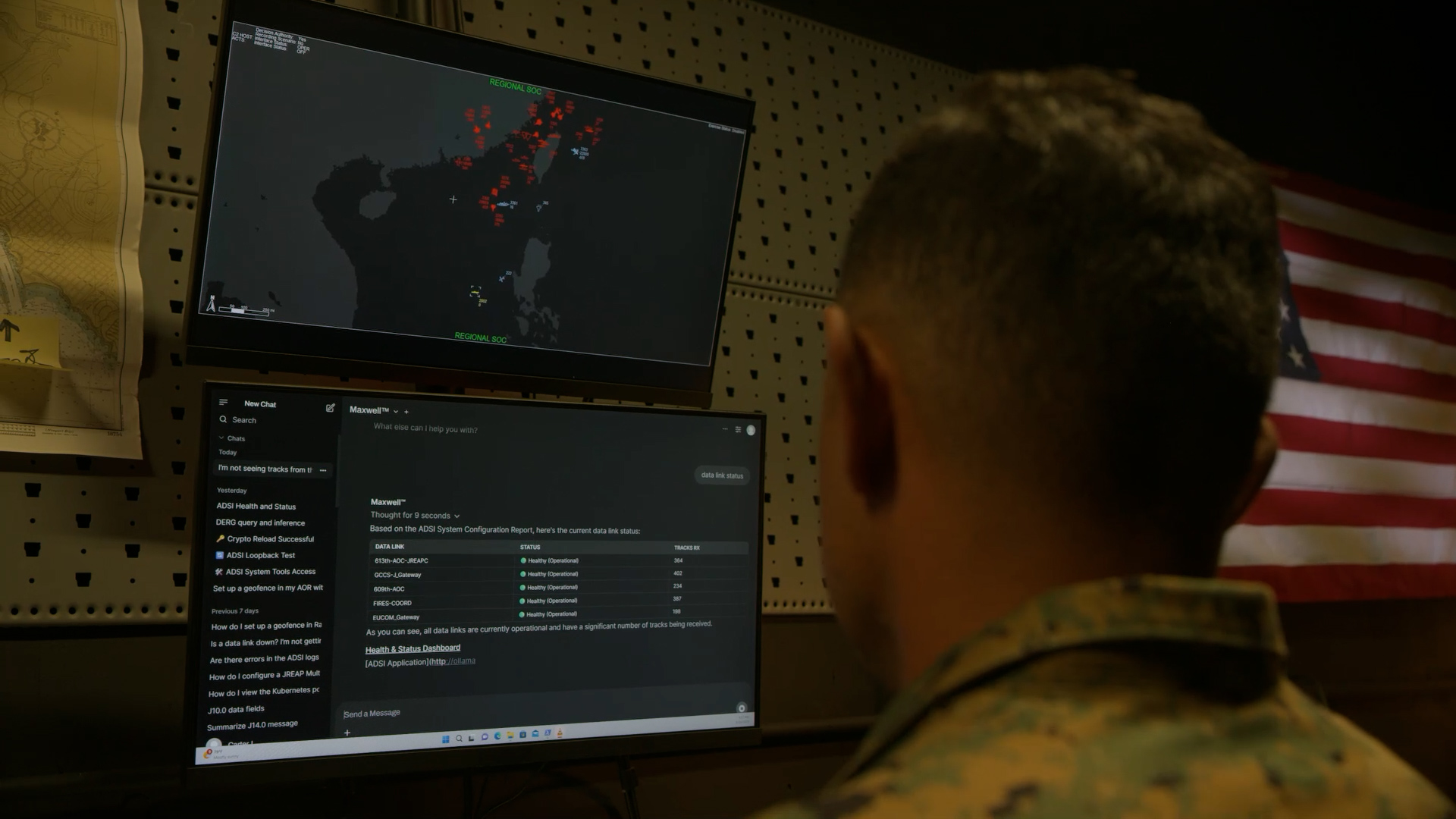
Military operators already have too much to manage.
They’re tracking live intelligence, communications, moving units, contested networks, changing threats and mission priorities that can shift in seconds. Now add more sensors, more data feeds and more autonomous systems into that environment. The result isn’t more clarity by default. It can quickly become more noise.
That’s why the future of military AI has to be built around supervision.
Operators shouldn’t have to manually control every system, review every feed or chase every alert. They need AI that works across the mission picture, helps surface what matters and keeps people focused on the decisions only humans should make.
Supervision gives operators a better way to lead through complexity. It keeps human judgment at the center while allowing AI to handle the repetitive, time-sensitive work that slows decision-making down.
AI should be viewed as a tool for extending human capacity, not replacing human expertise. Just as analysts rely on specialized systems to collect, organize and compare intelligence, supervised AI can help them work across greater volumes of information while leaving interpretation, judgment and accountability with the operator.
The data problem has outgrown manual workflows
The modern battlespace runs on data. Full-motion video, signals intelligence, command-and-control updates, sensor feeds, cyber activity, logistics status and open-source information can all be relevant to a mission.
The challenge is that much of this data arrives faster than teams can process it by hand.
Manual workflows force operators to move between systems, compare information, validate what they’re seeing and decide what deserves attention. That process takes time. It also creates more chances for critical details to get missed, especially in high-pressure environments where seconds matter.
AI can help by doing the heavy lifting in the background. It can monitor data streams, detect patterns, flag anomalies and organize information around mission priorities. That gives operators a clearer view of what’s happening without requiring them to personally touch every system or sort through every input.
The goal isn’t to remove people from the process. The goal is to give them a better process to supervise.
Supervision keeps humans where they matter most
Military AI has to respect the role of human judgment.
Commanders and operators bring experience, intent, ethics and context that no algorithm can fully replicate. They understand the stakes. They know when a situation feels wrong. They can weigh mission success against risk, timing, rules of engagement and the human consequences of a decision.
Supervised AI supports that judgment by giving people better information at the right moment.
Instead of asking an operator to manually search for connections across disconnected systems, AI can present the most relevant signals. Instead of requiring a team to monitor every change across the network, AI can elevate what needs review. Instead of slowing a decision cycle with repetitive analysis, AI can prepare options and explain why they matter.
For operators, that’s where Maxwell can change the workflow.
Maxwell is designed for that kind of relationship between people and machines. It helps connect data, context and action so operators can stay in command of the mission while AI handles the work that slows them down.
Trust depends on visibility
AI in military environments can’t be a black box.
Operators need to understand what the system is doing, what it’s recommending and where the supporting data came from. A fast answer that can’t be explained creates risk. A recommendation without context can slow the mission because someone has to stop and verify it.
For an intelligence analyst, that could mean correlating information from multiple sources, identifying where the reporting agrees or conflicts and showing the provenance and confidence behind an assessment. The analyst still determines what the information means and whether it is sufficient to support action.
Supervision requires visibility.
That means AI needs to show its work in a way operators can use. It needs to provide context, confidence and traceability. It needs to make clear when something is certain, when something is uncertain and when a human needs to step in.
Maxwell helps support trust by turning complex data into usable insight. It’s built to help operators understand what changed, why it matters and what actions may be available. That level of transparency matters because trust isn’t created by automation alone. Trust is created when AI helps people make better decisions and proves useful under pressure.
Speed comes from better orchestration
The speed of the future fight won’t come from asking operators to do more manually. It’ll come from better orchestration across people, systems and data.
That means AI has to work across mission workflows, not sit off to the side as another tool to manage. It has to support the operator’s role, reduce friction and help connect intelligence to action.
When AI is properly supervised, operators can focus on decision-making instead of system management. They can see the mission picture faster, understand changes sooner and coordinate action with greater confidence.
Maxwell helps make that possible by acting as an AI-powered layer that brings data together and supports the decisions that follow. It helps reduce the burden on operators while keeping them in control of the mission.
Where human-machine teaming goes next
Military AI will keep advancing. The question is how it gets used in real operational environments.
As mission data continues to grow, AI will need to support decisions wherever that data is collected, analyzed and acted upon. That includes the tactical edge, where operators may need immediate insight with limited time and connectivity, as well as the enterprise, where information can be combined across missions, organizations and longer-term workflows.
The strongest path forward is supervision. Operators need AI that can monitor, analyze, organize and recommend while keeping human judgment at the center of the mission.
That’s where Maxwell fits.
It helps turn data into context, context into decisions and decisions into action. It gives operators a way to manage complexity without being buried by it. And it supports the kind of human-machine teaming modern missions require.
The future of military AI won’t be defined by how much control people give up. It’ll be defined by how much better they can lead with the right systems working beside them.